


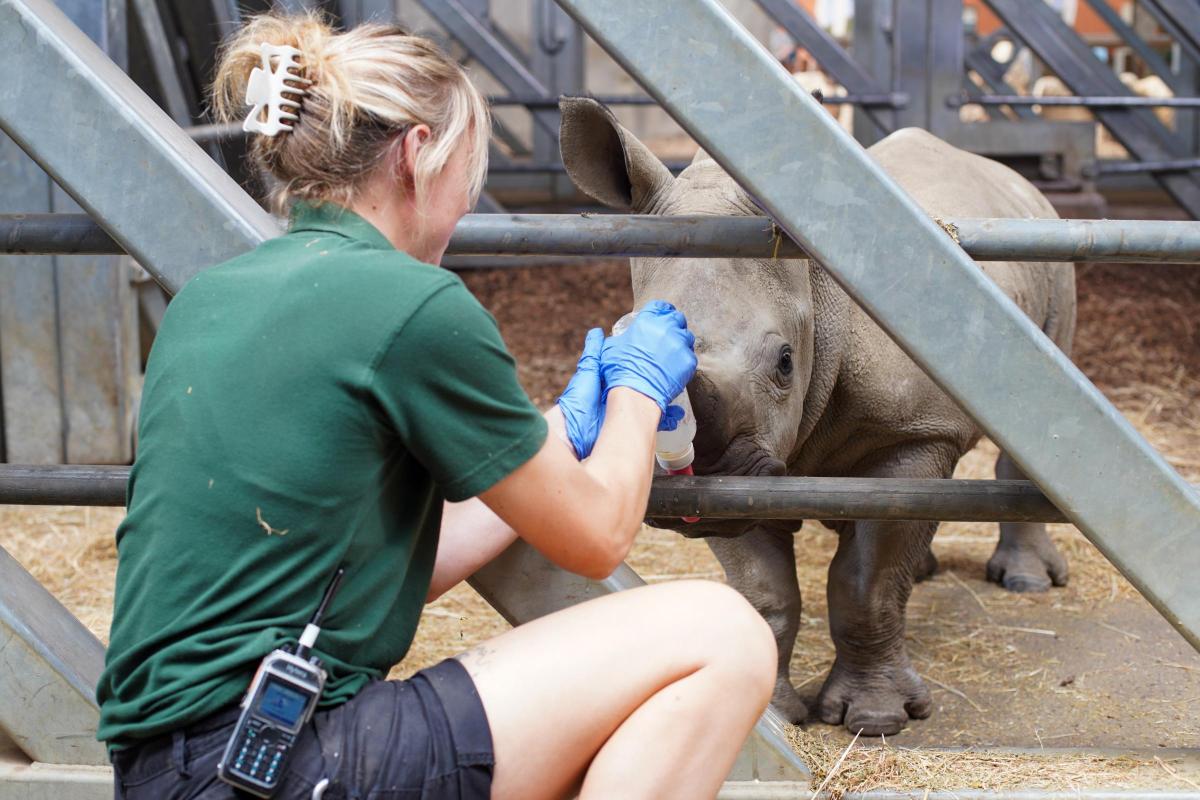
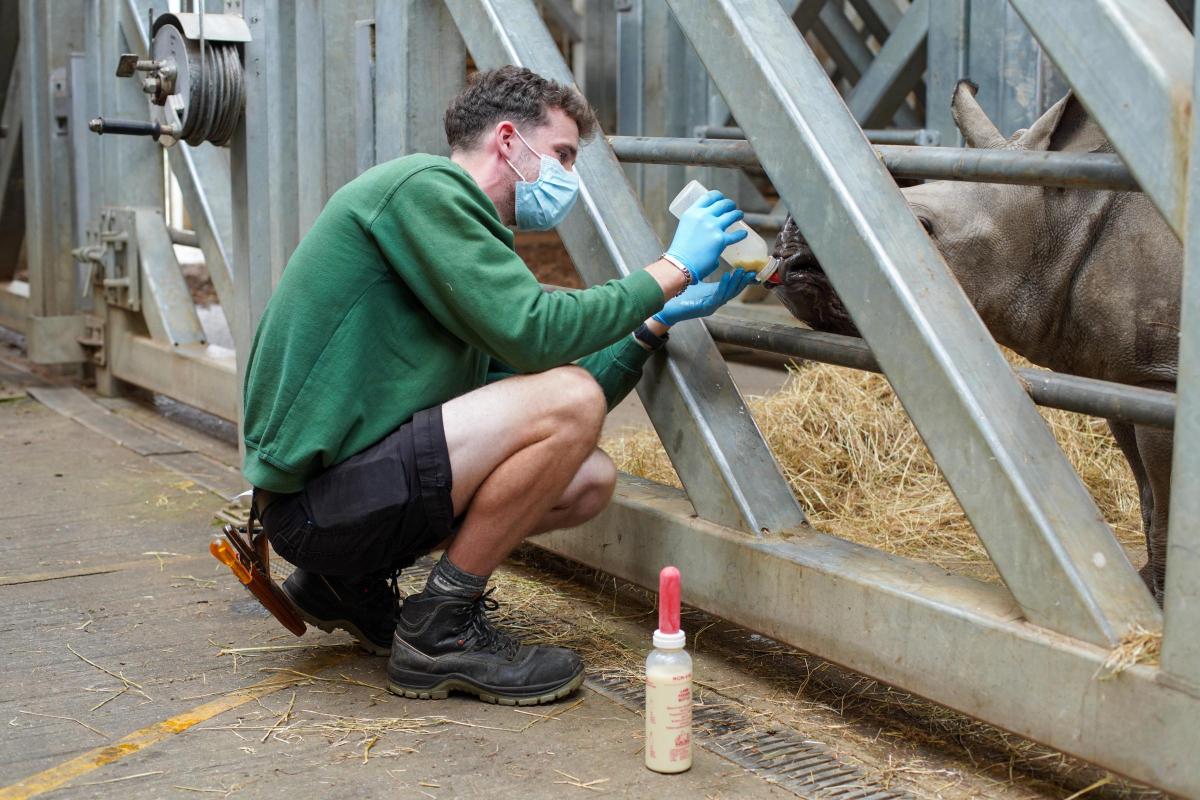

A baby rhino is back on her feet after battling a life-threatening illness.
Amali, a southern white rhino calf born at Marwell on March 15, fell seriously ill in late May with a bacterial infection which nearly claimed her life.
She was diagnosed with salmonellosis after becoming lethargic and developing digestive problems.
Read more
-
Winchester rugby team to cycle 600km from Venice to Rome for hospice in Matt's memory
-
Residents angry at council's 'woeful' failure to care for young trees

Darren Ives, a hoofstock keeper at Marwell, said: "When you work with animals every day, you notice the smallest changes. As Amali became more uncomfortable, we knew something wasn’t right."
Marwell’s veterinary team worked with specialists from Liphook Equine Hospital and consulted rhino experts in South Africa to identify and treat the infection.
Though salmonella is harmless to many adult animals, in a young rhino calf it can be fatal.
Amali developed severe diarrhoea and inflammation, which led to significant fluid and nutrient loss.
She remained under intensive care for more than two months.
One of the biggest challenges was ensuring Amali could remain with her mother, Zahra, throughout her treatment.
Dr Elysé Summerfield-Smith, principal vet at Marwell, said: "Amali is still receiving supplementary feeds and is still being closely monitored by our veterinary and hoofstock teams, so her recovery isn’t completely finished. But she’s making really encouraging progress."
Zahra developed mastitis during Amali’s illness, which reduced her milk supply.
Rather than hand-rearing the calf, the team introduced supplementary bottle feeds while allowing her to continue nursing from her mother.
Because the infection disrupted the natural bacteria in Amali’s digestive system, the team needed to find a suitable probiotic.

With no rhino-specific probiotics available in the UK, Dr Summerfield-Smith researched alternatives and developed a custom blend using human and canine probiotics.
The team’s dedication and collaborative approach appear to have paid off.
Amali has now been discharged from intensive care and can be seen exploring the main field at Marwell alongside her mother.
Mr Ives said: "There’s been a lot of emotional late nights and early mornings, dedicated teamwork and covering each other’s work within the team to support Amali’s recovery and each other but seeing her today, exploring in the field, following mum and behaving like a young rhino again, really has made it all worthwhile."


Share