



A community and Heritage Lottery Funded project to see one of the UK’s oldest watermills milling flour once more, has reached an exciting engineering milestone.
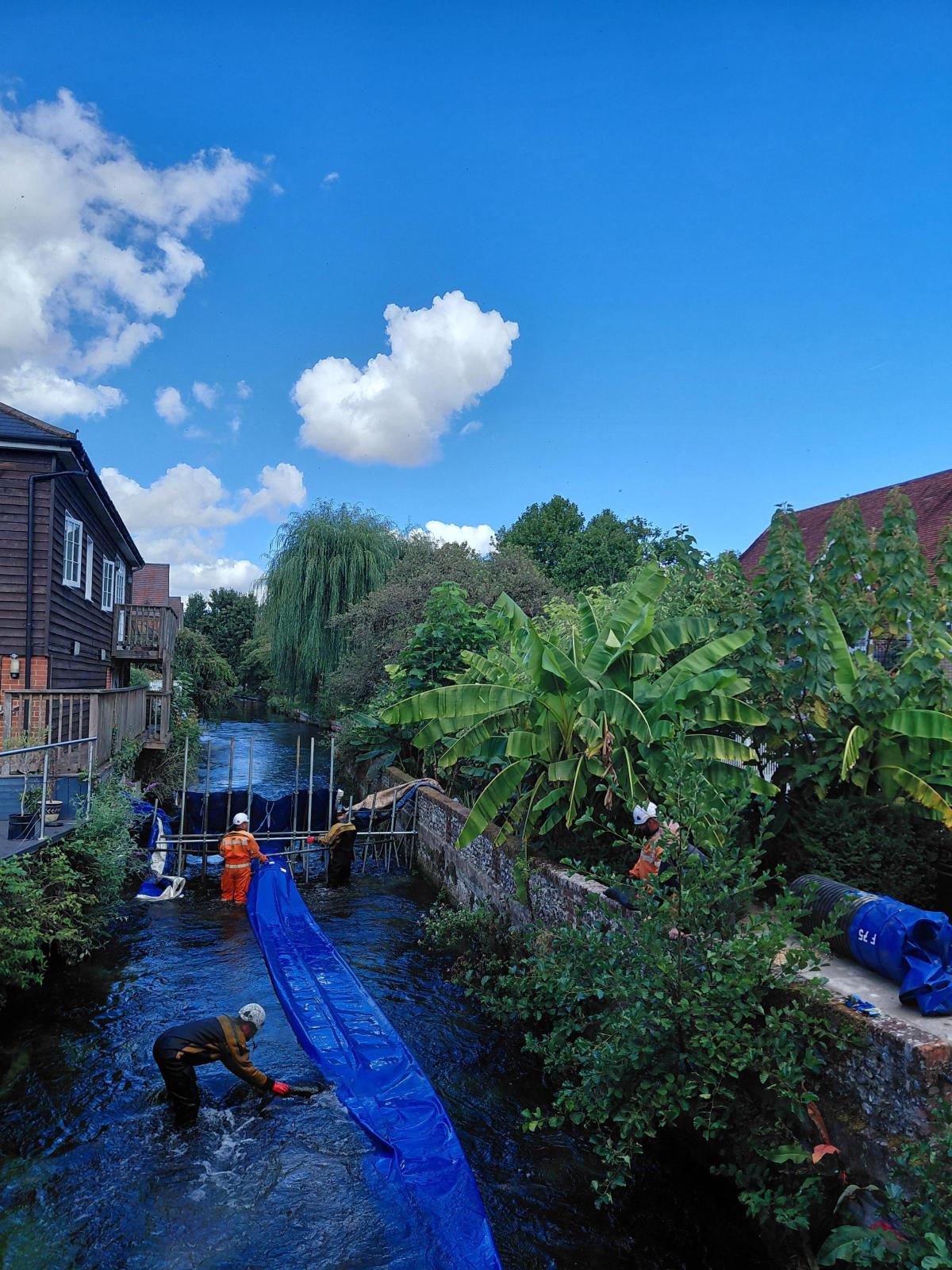
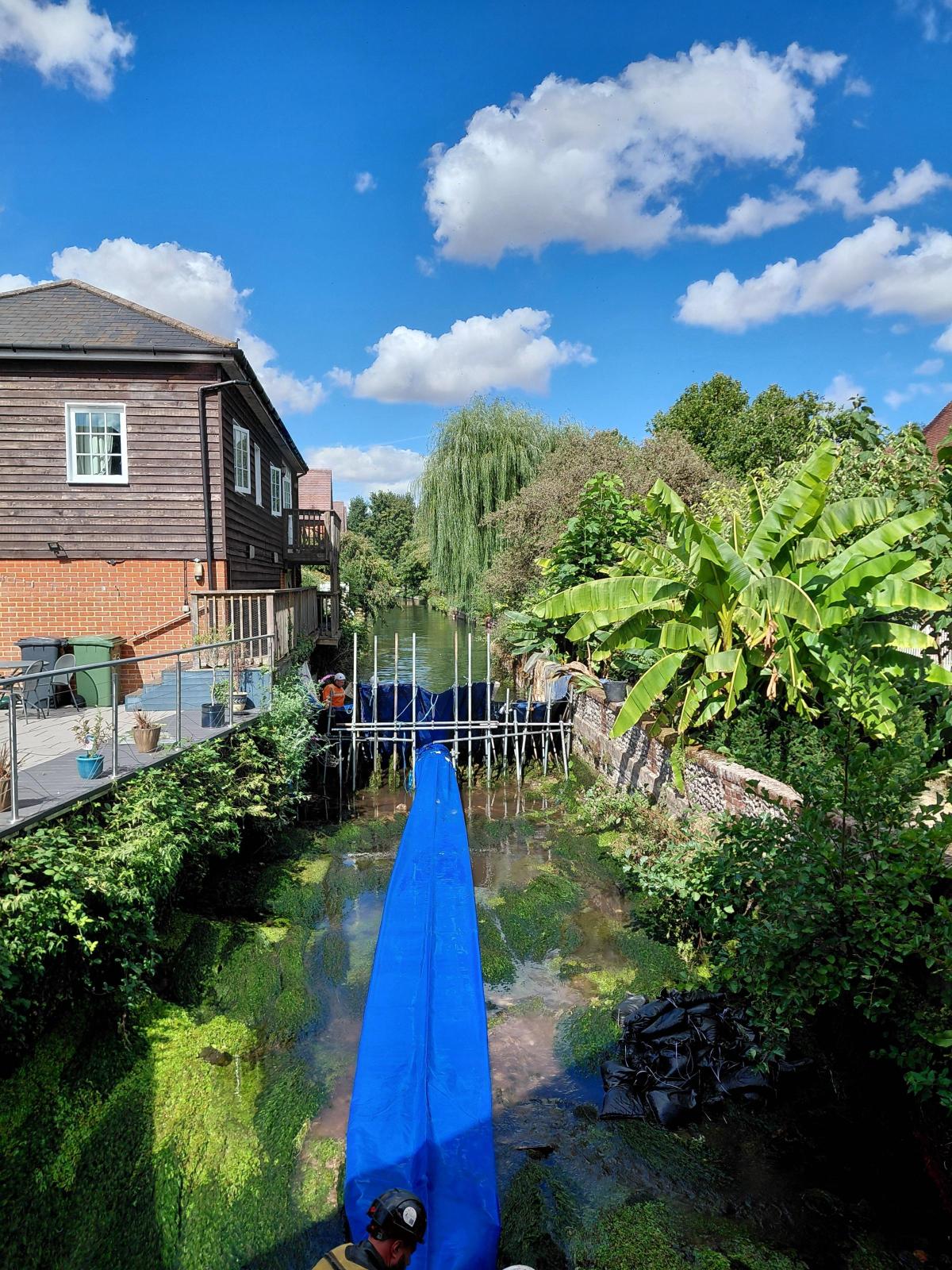
The famous river Itchen which powers beneath the National Trust’s Winchester City Mill in Hampshire has been temporarily dammed so that a new sluice gate can be safely installed.
A blue flume has also been fitted, to maintain a small flow of water through the mill race, allowing aquatic wildlife to move freely while the work is underway.

The sluice gate, which will be completed by the end of September, replaces a gate that had reached the end of its life and needed to be removed. This is a crucial phrase in a wider project to reinstate the mill’s water wheel and restore flour production to this industrial heritage gem, after a four year pause.
The sluice gate controls the flow of water through the building. It is a rarely seen but fundamental connection between the mill, the river that runs beneath the city, and the ancient tradition of stoneground flour production.
Millwright and restoration engineer Ian Clark has been working on site at the mill for four months, building the new sluice gate as well as the 3m wide, two-tonne waterwheel, which will be completed in early 2027. The previous waterwheel was officially decommissioned in February 2023 due to general wear and tear.
Ian has a long association with Winchester City Mill; in 2003 he restored the waterwheel, gears and millstones, allowing the mill to grind wheat into flour for the first time in 90 years. Since then, he has carried out repairs and improvements.
This project has been made possible thanks to support from the Heritage Lottery Fund, and a public fundraising campaign that raised over £130,000.
Kim Burrell, Winchester City Mill Operations Manager: “This is a really exciting moment in our plans to bring back flour production to Winchester City Mill after several years. It was quite nerve-wracking, watching the contractors install the temporary dam, but it’s worked beautifully, with aquatic wildlife passing through unhindered.
“It’s going to be wonderful to see and hear the mill in operation once more. Hopefully, in a few months’ time, we’ll be unveiling the new waterwheel and supplying flour to our on-site café, visitors and local businesses once again.”
Milling machinery at Winchester City Mill, like all hydro systems, uses only water power. The mill has been producing healthy and sustainable stoneground wheat flour, with a few historic breaks, since 932, possibly earlier. It has been zero carbon for over one thousand years.
Climate extremes could impact on the future of Winchester City Mill. This summer’s drought saw the lowest water levels at the mill for several years. Low water levels affect the mill’s ability to make flour, and adversely, intense rainfall can damage the waterwheel -– a reminder that this building is intrinsically linked to the health of the river.
Winchester City Mill is open Thursday to Sunday, 10am to 4pm, free of charge.
https://www.nationaltrust.org.uk/visit/hampshire/winchester-city-mill


Share